Historical reference: Version 42, before the scanning and copy cleanup. Return to the current page.
How to read this page: Confirmed rules describe the working model. Open Decisions and proposals are not finished rules. The rules incorporate the Granola decisions confirmed through November 2, 2026. Shared rules live under Renown & Winning, station sections explain their specific mechanics, and App Development describes the interface. Earlier copy is retained in the linked Version 39 archive. Numerical values marked “Working” remain subject to simulation or playtesting; items marked open are undecided.
The Premise
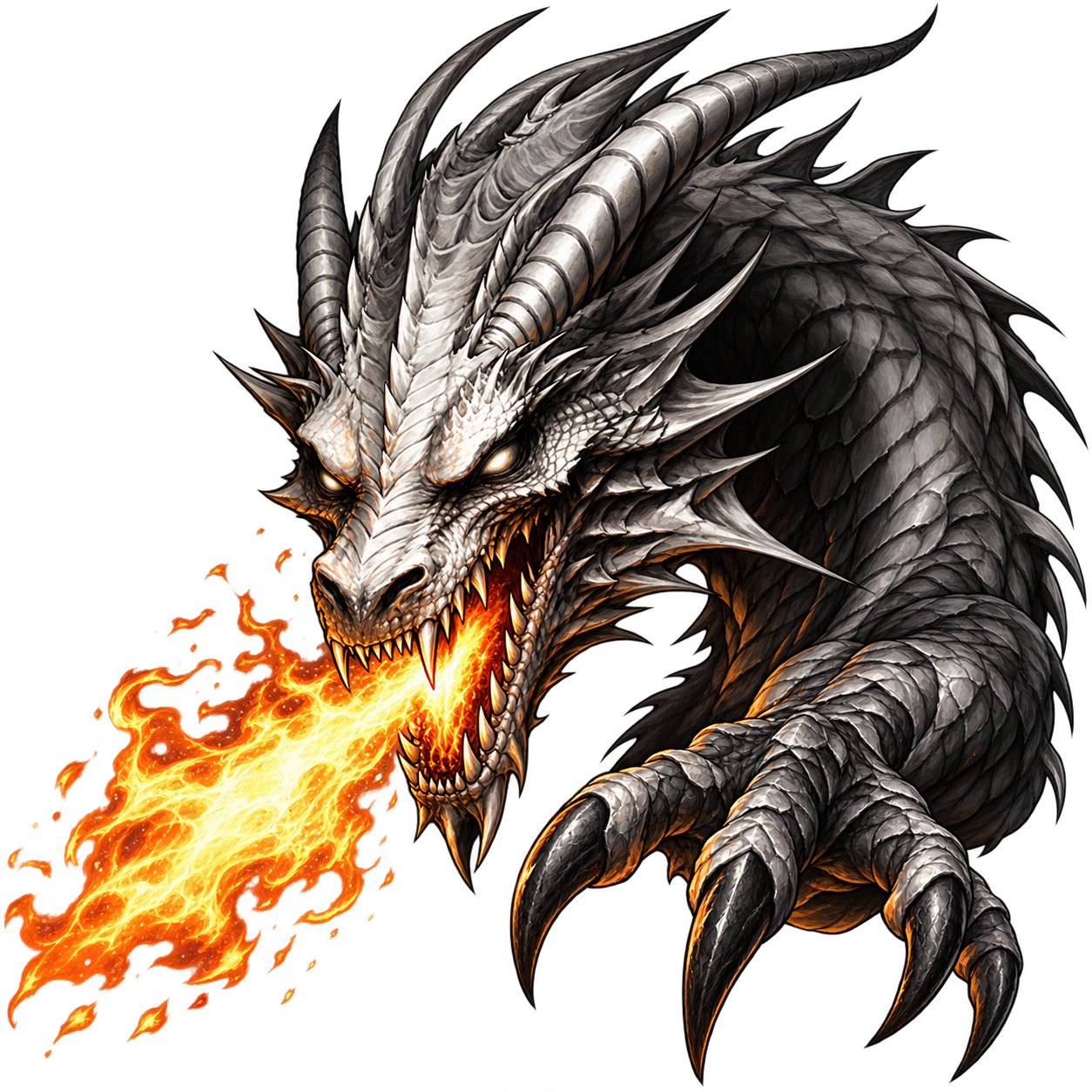
Ragnarök has shattered the old order. Asgard lies destroyed, Midgard stands in ruins, and the Nine Realms have fallen under the rule of three formidable powers: Níðhöggr the Black Dragon, Marvargr the Sea Kraken, and Surtur the Fire Giant. Each commands a Domain of three realms. Among the survivors, a new struggle for hope and glory begins.
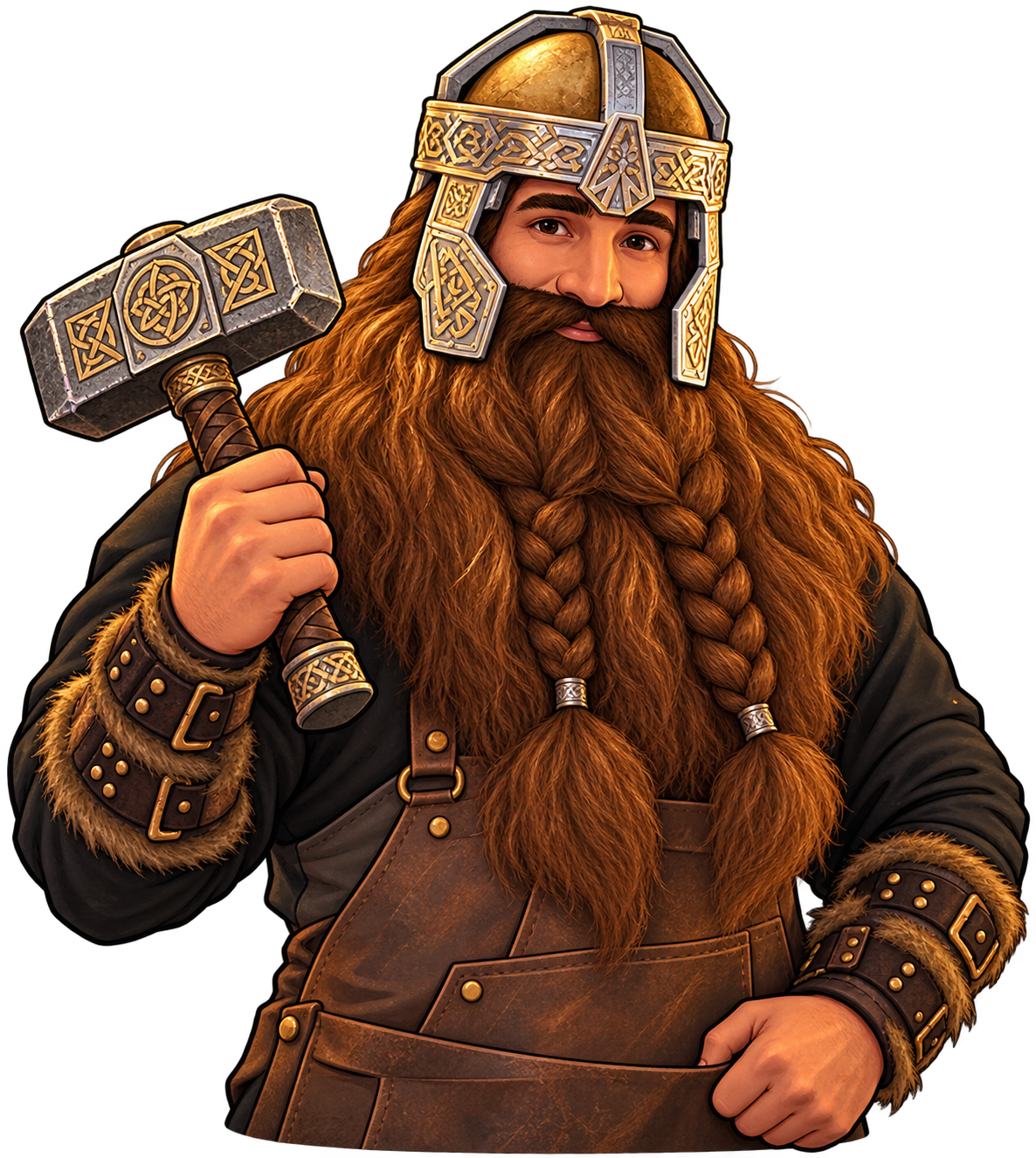
Guided by the explorer Leif Erikson, players form warbands to reclaim the realms. Their journey follows three paths: Strategy at the War Tables, Skill through Questing, and Creation at Ivaldi’s Forge. Each challenge earns Renown, which warbands place across the map to build their influence and liberate the lands.
Warbands compete for realm control, yet share a common purpose: defeating the bosses that stand against them. Three encounters bring everyone together, with each player taking a turn as their warband’s champion. Success calls for sharp minds, steady hands, and choices that can change the fortunes of the entire Nine Realms.
At the end of the journey, honors recognize the top three warbands and the individual champions of archery, axe throwing, and staff casting.
Eight warbands of three move among Strategy, Skill, and Creation, competing for control of nine realms across three Domains. Three shared boss battles bring everyone together.
8 teams · 3 players per team8 activity rounds3 boss battles
The 4–3–1 rotation
- Four War Table matches: each of the three games once, plus one repeat, against four different opponents.
- Three Questing visits: one in each Domain.
- One scheduled Forge visit: craft an artifact. Rune and Bane shopping also requires visiting the Forge during interludes.
A coordinated event
The app presets all eight activity rounds with no idle teams. Each round has two War Table matches involving four teams, three teams Questing, and one at the Forge. Station sections explain the rules; the schedule provides routing and clock times.
02
Realm Map, Renown & Winning
Earn Renown, allocate it across the Nine Realms, and compete for realm control. This section defines shared scoring, coins, standings, and final ranking.
Realm control and placement
A team controls a realm by holding the most Renown there. The Realm Map shows each realm’s standings and the team’s available balance.
| Renown source | Where it can be placed |
|---|
| War Tables | Any of the nine realms |
|---|
| Questing | Within the Domain visited |
|---|
| Boss battles | Any of the nine realms |
|---|
Allocate earned Renown after each activity rather than stockpiling it for final placement. Confirmed placements are logged at round end; other teams see updated realm standings at the start of the next round. See Boss Battles for fight allocation timing and Forge for artifact resolution.
Tiered Renown and Attunement
War Table, Questing, and boss-champion performance converts to base tiers of 18, 36, or 54 Renown. Station rules determine the tier. Where eligible, apply floor(tier × 1.09), giving 19, 39, or 58. Round down; never add Attunement to raw performance scores.
| Context | When the +9% applies |
|---|
| War Tables | The game’s Domain matches the team’s Attunement. |
|---|
| Questing | The visited Domain matches the team’s Attunement. |
|---|
| Boss champion | The boss’s Domain matches the team’s Attunement; the boosted award affects both damage and potential fight Renown. |
|---|
| Benevolent artifact | The placement realm is in the team’s attuned Domain. |
|---|
| Siphon artifact | The drained realm is in the team’s attuned Domain. |
|---|
| Convergence artifact | The destination realm is in the team’s attuned Domain. |
|---|
Apply an eligible artifact bonus once. The artifact rules specify which Renown and boss-HP amounts use that value. The Attunement Test assigns the team’s fixed Domain.
Digital Coins
Digital coins fund Forge purchases. At each round’s interlude start, award floor(that round’s eligible earned Renown ÷ 9) coins at the baseline rate. Discard that round’s remainder; it does not carry forward. Earning coins does not consume Renown, and coins cannot be converted back into Renown.
Diminishing returns have three tiers and are off by default. Admins can enable the feature and configure its Renown milestone thresholds and conversion rates.
Winning and the Nine Notches
Rank teams first by realms controlled, then by notches. Nine notches are available:
| Source | How it is earned | Notches |
|---|
| War Tables | Highest single-game raw score in each game. Repeated-game scores are not added. | 3 |
|---|
| Archetypes | Team of the individual winner in archery, axe throwing, and staff casting. Each individual’s score is cumulative across all Questing and boss-champion attempts. | 3 |
|---|
| Capital realms | Control of each capital realm. | 3 |
|---|
If realms and notch totals are both tied, the tied teams roll Rune dice simultaneously until exactly one team rolls a double. Other team ties, including a War Table notch tie, use the same dice procedure; boss-selection ties are random. Individual archetype ties use head-to-head attempts. There is no separate boss-champion title, bonus, or notch.
Raw-score standings are visible throughout the event; notches appear only at the end. Keep team standings separately for each War Table game and individual standings by archetype. Raw scores exclude Attunement. Players with no recorded score appear alphabetically as “Not yet participated”; scored players appear in ranked order.
03
App Development
Screens, permissions, inputs, and event automation. Game calculations follow Renown & Winning and the station rules below.
Invitation and RSVP Flow
- Send captains invitations first so they can recruit their teams; send a separate blanket invitation to individuals without teams.
- The RSVP email contains event information and a response mechanism. Responses go to Vin before registration, allowing quiet handling of full slots and spectator-only guests.
- Vin sends accepted participants a separate welcome email with the registration link. Places are first-come, first-served; messaging should convey urgency.
Teams, Roles, and Access
- Mobile-first player experience; all admin functions are accessible through a web browser.
- Admin creates teams and assigns registered players manually, with drag-and-drop controls. Admin designates one team lead; for unfamiliar groups, Vin chooses or consults the captain.
- Team leads manage the roster and final archetype assignments. Admins or team leads can replace a player by name while preserving the team slot’s accumulated scores and Renown.
- Moderators see their assigned station and the current round’s scheduled teams. Admin access includes moderator capabilities so Vin can operate across phone and iPad without repeated role switching.
Pre-Event Onboarding
- Show team roster and teammates, first-come-first-served mascot selection, and archetype preferences. The team lead controls final assignments.
- Link to website education and lore covering crafting, Runes, Banes, artifacts, Questing, and board-game rules, rather than embedding this content in the app.
Opening and the Attunement Test
- Begin the 30-minute opening with “Welcome to Vorngard” on phones and the TV.
- Admin triggers the Attunement Test: exactly nine questions with picture-based choices, taking about five minutes. All team members complete it together during the opening; it cannot be taken before the party.
- Assign one fixed boss Domain and display it as a Domain-themed frame around the team logo. Provide an optional animation container that can be disabled if reveal content is unavailable.
- The team lead finalizes archetypes through one interface. An assigned archetype cannot be selected again unless freed. Lock assignments at the countdown deadline and auto-assign unfinished selections.
Alerts and Timers
- Task banner: drops from the top, partially covers the interface without blocking it, links directly to the required screen, and clears when the task is completed. Use for archetypes, the Attunement Test, and Renown allocation.
- Full-screen takeover: use for cinematic events, including round starts/ends and boss encounters.
- Give alert types distinct sounds. Admin configures warning times, such as five minutes, two minutes, and 30 seconds. Keep the countdown visible at the top during active rounds.
Round and Moderator Workflow
- Show each team its next scheduled station and location. Use the rotation matrix and assigned Questing Domains.
- Moderator opens the station, confirms attendance manually, and selects Ready. No player QR check-in is required. All stations Ready enables admin to start the round.
- For Questing, list each player with a dropdown for every throw or shot, four scoring tiers, and an optional bonus checkbox, such as split axe or double bullseye. Lock each row on submission and show the result immediately on the player’s app for verification. Calculate totals automatically.
- For boss fights, show the team lead only eligible champions and use the same scoring controls. Retain score-entry order for the deferred attack reveal.
Interlude and Realm Map
- At interlude start, show earned Renown and coins in a banner. Apply the coin rules automatically.
- Tapping allocation opens the pannable, zoomable nine-realm map. Realm detail shows its image and name, all eight teams ranked by Renown percentage with Renown totals in parentheses, the current team highlighted, and the available balance.
- Use plus/minus controls and a confirmation card for placement. Keep the task banner until all Renown is assigned. Auto-allocate at the deadline; admin can correct exceptions. The Questing rules specify its fallback allocation.
- Show raw-score standings as defined under Performance Standings. Keep notches hidden until final results.
Forge Shopping and Inventory
- Allow browsing and cart building at any time. Finalize purchases only during interludes: the team physically visits Ivaldi’s Forge and hands its phone to Ivaldi, who enters a secret six-digit code. Move confirmed purchases into inventory for use in future interludes.
- Expose admin price controls for both Runes and Banes, and configurable coin-return controls. Prices and effect rules are specified under Ivaldi’s Forge.
- To assign a Rune or Bane, select the item and target, then confirm the commitment. Show a final receipt with effect details and activation timing. Validate targeting and eligibility against the timing rules.
- Keep pending assignments hidden until the next round. At activation, notify affected teams with a banner showing the net Rune/Bane calculation. During the Round 7 interlude, warn that this is the last Bane-assignment window.
Artifact Crafting and Activation
- Ivaldi grades the crafting task objectively and records Tier 1, 2, or 3. Store a blank artifact in the team inventory; choose its type only when activated.
- Provide two confirmation steps. For Siphon, select a target team and realm and show available Renown, points taken, and boss-HP impact. For Convergence, select source, destination, and an amount within the tier cap. For Benevolent, select a realm and show Renown and boss effects.
- Use the Forge artifact calculations to resolve effects during interludes. Gained Renown is immediately available for manual allocation; notify other teams at the next round’s start. Suppress the boss-effect line when its boss is dead.
Two teams of three compete in fast social games built around communication, drawing, and shared decisions. Every team plays four matches against four different opponents: each of the three games once, plus one repeat.
3 tables · 2 active at a time2 teams of 3 per match20 minutes of play4 different opponents per team
Dragon’s BaneTaboo · Domain of NíðhöggrGive clues while avoiding forbidden words; opponents monitor violations.
Giant’s CruciblePictionary · Domain of SurturRotate drawers and guess drawings within a timed turn.
Kraken’s CallWavelength · Domain of MarvargrUse clues and discussion to locate a position on a spectrum.
Schedule and play
The app preconfigures all matches across eight rounds. Two matches run each round; see the rotation matrix for opponents and games.
Prompts are Norse-inspired and accessible: clothing, food, terrain, creatures, dragons, goblins, and giants. Players do not need obscure lore.
Renown and Attunement
The winner always receives Tier 3: 54 Renown, regardless of raw score. Second place receives Tier 2: 36 Renown when its raw score is within 30% of the winner’s score (at least 70% of that score). Outside that range, second place receives Tier 1: 18 Renown for a blowout loss.
Apply the shared Attunement calculation when eligible. Placement follows the Renown placement table.
Recorded Results
Record raw game scores separately from tiered Renown. The shared notch rules define best-single-game scoring and dice tiebreaks; standings remain visible during play.
Game adaptations and testing questions are collected under Open Decisions & Playtesting.
Every team Quests once in each Domain, taking part in archery, axe throwing, and staff casting. Raw performance determines individual archetype standings; tiered awards build the team’s Renown within the Domain visited.
3 visits per team3 teams per round1 visit in each Domain
Níðhöggr · Black DragonSvartalfheim · Niflheim · NidavellirCapital: Svartalfheim
Marvargr · Sea KrakenJötunheim · Vanaheim · AlfheimCapital: Vanaheim
Surtur · Fire GiantMuspelheim · Asgard · MidgardCapital: Muspelheim
Scheduled visits and Domain selection
The app sets all three Questing times and Domain choices in advance. Each team Quests once in each Domain, with its attuned Domain always scheduled last.
Up to three teams may Quest in the same Domain in the same round. There is no separate per-Domain capacity limit.
The three archetypes
- Archer: archery.
- Berserker: axe throwing.
- RuneCaster: staff casting.
Renown and Attunement
Raw trial scores convert to working tiers of 18, 36, or 54 Renown, subject to simulation and activity-specific cutoff tables. Apply the shared Attunement calculation when eligible.
Questing Renown must be placed among the visited Domain’s three realms. If it is not allocated at round close, each realm automatically receives floor(award ÷ 3); the remainder is not awarded. For example, 58 Renown becomes 19 in each realm, with 1 point not awarded.
Individual Tiebreaks
Individual scores and archetype notches follow the shared scoring rules. If players tie for an archetype’s highest score, they compete head-to-head: one arrow, one axe, or one staff cast each. The higher score wins; repeat one attempt each until the tie is broken.
These Domain groupings remain in effect. Proposed remapping and raw-score cutoff testing are listed under Open Decisions & Playtesting.
Each team has one scheduled visit to Ivaldi’s Forge to craft an artifact through a mini-game. Performance determines artifact quality. Rune and Bane purchases require a physical visit to the Forge; wagers have been removed.
1 team at the Forge per round1 scheduled visit per teamTeam k visits in Round k
Artifacts and Quality
Working artifact values are 10, 20, and 30 Renown for Tiers 1–3, subject to simulation. With an eligible 9% Attunement bonus, they become 10, 21, and 32, rounded down.
Ivaldi grades the crafting activity as Tier 1, 2, or 3. The artifact remains a blank inventory item until the team chooses its effect at activation. Values are configurable before and after playtesting; apply an eligible Attunement bonus once.
Benevolent artifact
Place it in a realm to add Renown and deal the same value as damage to that Domain’s boss. Use the Attunement eligibility table for this and the other artifact types.
Siphon artifact
Target one team in one realm. In the team’s attuned Domain, first increase the siphon amount by 9%, rounded down. The target loses that boosted amount, the Domain’s living boss gains HP equal to that same boosted amount, and the placing team receives half the boosted amount, rounded down. Apply Attunement only once. Outside the attuned Domain, use the base siphon amount.
For example, an attuned 20-point Siphon drains 21, adds 21 HP to the living boss, and awards 10 Renown to the placing team.
The placing team can manually allocate the gained Renown immediately; common artifact timing below governs visibility.
Convergence artifact
A Convergence artifact moves only the placing team’s own Renown. Select a source realm holding that team’s Renown, then the destination realm.
| Artifact tier | Transfer cap |
|---|
| Tier 1 | Up to one third of the team’s Renown in the source realm |
|---|
| Tier 2 | Up to two thirds of the team’s Renown in the source realm |
|---|
| Tier 3 | Up to 100% of the team’s Renown in the source realm |
|---|
When the destination is in the team’s attuned Domain, apply the 9% Attunement bonus to the total amount transferred, rounded down. For example, transferring 50 Renown removes 50 from the source and adds 54 to the destination. Convergence has no boss effect. Teams choose any amount up to their tier’s cap; using the full cap is optional.
Buying and applying Runes and Banes
Purchases require a physical Forge visit during an interlude. Items become usable in future interludes; the App Development workflow describes the cart and code confirmation.
| Tier | Price |
|---|
| Minor | 3 coins |
|---|
| Medium | 9 coins |
|---|
| Greater | 18 coins |
|---|
Both Rune and Bane prices are admin-configurable.
Rune and Bane Timing
- Runes are beneficial; Banes are harmful. Every Rune and Bane lasts one round.
- Effects are applied only during an interlude and normally begin at the start of the next round. Active effects are announced at round start.
- Cancellation works one effect against one effect across tiers: Minor carries 1 effect, Medium 2 effects, and Greater 3 effects. A Greater Rune cancels three Minor Banes or one Medium plus one Minor Bane. Uncancelled Rune effects give their benefit; uncancelled Bane effects apply.
- Each source team may assign one Rune and one Bane per target team—either one alone or both. It may target multiple teams.
- Block Bane assignment when the target’s next activity is a boss fight or its scheduled Forge visit. Do not queue a new Bane across that ineligible activity. Runes remain active during boss fights; Rune effects do not apply at the Forge.
Multiple Banes and Renown
The first active uncancelled Bane applies its own effect only. Each additional active uncancelled Bane adds a 9% Renown reduction: two Banes give 9%, three give 18%, four give 27%, and five give 36%.
The additional reduction is 9% × (n − 1), added rather than compounded. Every uncancelled Bane that can affect the team is included when calculating the Renown reduction. Always round down. Total reduction is capped at 100% of the gain, so Banes cannot produce negative Renown.
Realm Renown
Realm prize tokens have been removed entirely. There is no realm target cap.
Artifact Resolution
Artifacts resolve during interludes. Gained Renown is immediately available for manual allocation; other teams see artifact use and placements at the start of the next round. Living wounded bosses can gain or lose HP from artifacts. Boss persistence rules govern later kills and dead bosses.
Unresolved crafting, cancellation, purchase, and stacking questions are collected under Open Decisions & Playtesting.
Three shared encounters bring all eight warbands together against Níðhöggr the Black Dragon, Marvargr the Sea Kraken, and Surtur the Fire Giant. Each team sends one champion to each fight, and every player champions their team once.
3 encounters · 20 minutes play + 10 interlude1 champion per teamNo repeat champions
Timing and boss selection
| Encounter | When | Round format | Working HP |
|---|
| Boss 1 | After Round 3 | 20 minutes play + 10-minute interlude | 150 |
|---|
| Boss 2 | After Round 5 | 20 minutes play + 10-minute interlude | 200 |
|---|
| Boss 3 | After Round 8 | 20 minutes play + 10-minute interlude | 250 |
|---|
The boss comes from the Domain with the highest accumulated Renown; selection ties are resolved randomly. HP values are working assumptions to test by simulation.
Choosing a champion
- The app plays an animated clip at the start of the encounter.
- Each team sees its eligible members and selects its champion.
- Only members who have not yet been champion are eligible: three choices for Boss 1, two for Boss 2, and the remaining member for Boss 3.
Attack Reveal
All champions complete their attacks while moderators record the results. The app then reveals each hit in entry order, showing the player’s name, warband, damage, and the boss’s decreasing HP. The animation stops at 0 HP; any undisplayed results still count toward team Renown and individual raw-score totals.
Damage and potential Renown
Champion performance converts to the shared Renown tiers and Attunement calculation.
The resulting value is both boss damage at 1:1 and the team’s potential Renown for that fight. Combined champion damage and relevant artifact effects are applied to the boss. Realm Renown deposits do not reduce boss HP.
Combined champion damage is at most 432 without Attunement, or 464 if all eight champions receive the bonus.
Victory and failure
Boss defeated: each team receives its full boss-fight Renown. Boss survives: each team receives floor(award ÷ 2). Damage is not halved, and earlier Renown is never reduced.
For example, a base tier of 54 with Attunement gives 58 damage and 58 potential Renown. If the boss survives, the team receives 29 Renown. Its 58 damage and previously accumulated Renown remain unchanged.
Use the shared placement and final-ranking rules for fight Renown and notches.
When Fight Renown Is Allocated
After each boss fight, teams have a 10-minute interlude to allocate the Renown earned in that fight, before the next activity round or final scoring begins.
Later Encounters and Artifact Effects
Surviving boss HP does not carry over to later encounters. If an artifact later defeats a previously surviving boss, it does not restore Renown lost in that encounter. A dead boss cannot be resurrected; Artifact HP increases do not apply to it.
Raw-score cutoffs, artifact resolution order, and cinematic timing are listed under Open Decisions & Playtesting.
08
Event Schedule and Team Itineraries
Working routing and timing for eight placeholder teams. Game codes: DB = Dragon’s Bane (Taboo), GC = Giant’s Crucible (Pictionary), KC = Kraken’s Call (Wavelength). The three physical War Tables provide two active match positions, A and B.
Schedule Assumptions
The matrix fixes games, opponents, Questing times, and Forge visits. The app assigns each team’s three Questing Domains after Attunement is known, with the attuned Domain last; the tables therefore identify Questing visits without speculative Domain names. Team numbers determine Forge timing: Team 1 in R1 through Team 8 in R8. Early-versus-late Forge balance remains untested.
Boss encounters follow R3, R5, and R8. Each includes its own immediate allocation interlude. Dinner remains after R4. Pregame practice takes place before the Opening.
Per-Round Matrix
| Round |
War Table A |
War Table B |
Questing teams |
Ivaldi's Forge |
| R1 | DB: T2 v T5 | KC: T3 v T4 | T6 · T7 · T8 | T1 |
|---|
| R2 | GC: T3 v T6 | KC: T1 v T5 | T4 · T7 · T8 | T2 |
|---|
| R3 | GC: T4 v T8 | KC: T2 v T7 | T1 · T5 · T6 | T3 |
|---|
| Boss 1 | | | All teams, 1 champion each | |
|---|
| R4 | DB: T3 v T8 | GC: T1 v T2 | T5 · T6 · T7 | T4 |
|---|
| Dinner | | | All teams | |
|---|
| R5 | DB: T1 v T4 | GC: T6 v T7 | T2 · T3 · T8 | T5 |
|---|
| Boss 2 | | | All teams, 1 champion each | |
|---|
| R6 | DB: T3 v T7 | KC: T2 v T8 | T1 · T4 · T5 | T6 |
|---|
| R7 | DB: T1 v T6 | GC: T5 v T8 | T2 · T3 · T4 | T7 |
|---|
| R8 | DB: T5 v T7 | KC: T4 v T6 | T1 · T2 · T3 | T8 |
|---|
| Boss 3 | | | All teams, 1 champion each (finale) | |
|---|
Per-Team Itinerary
| Team |
R1 |
R2 |
R3 |
R4 |
R5 |
R6 |
R7 |
R8 |
| Team 1 | Forge | KC v T5 | Questing | GC v T2 | DB v T4 | Questing | DB v T6 | Questing |
|---|
| Team 2 | DB v T5 | Forge | KC v T7 | GC v T1 | Questing | KC v T8 | Questing | Questing |
|---|
| Team 3 | KC v T4 | GC v T6 | Forge | DB v T8 | Questing | DB v T7 | Questing | Questing |
|---|
| Team 4 | KC v T3 | Questing | GC v T8 | Forge | DB v T1 | Questing | Questing | KC v T6 |
|---|
| Team 5 | DB v T2 | KC v T1 | Questing | Questing | Forge | Questing | GC v T8 | DB v T7 |
|---|
| Team 6 | Questing | GC v T3 | Questing | Questing | GC v T7 | Forge | DB v T1 | KC v T4 |
|---|
| Team 7 | Questing | Questing | KC v T2 | Questing | GC v T6 | DB v T3 | Forge | DB v T5 |
|---|
| Team 8 | Questing | Questing | GC v T4 | DB v T3 | Questing | KC v T2 | GC v T5 | Forge |
|---|
Per-team totals · rotation validation
| Team |
Opponents (in order) |
Games |
Repeat |
Quest rounds |
Forge round |
| Team 1 | T5, T2, T4, T6 | DB 2 · GC 1 · KC 1 | DB | R3, R6, R8 | R1 |
|---|
| Team 2 | T5, T7, T1, T8 | DB 1 · GC 1 · KC 2 | KC | R5, R7, R8 | R2 |
|---|
| Team 3 | T4, T6, T8, T7 | DB 2 · GC 1 · KC 1 | DB | R5, R7, R8 | R3 |
|---|
| Team 4 | T3, T8, T1, T6 | DB 1 · GC 1 · KC 2 | KC | R2, R6, R7 | R4 |
|---|
| Team 5 | T2, T1, T8, T7 | DB 2 · GC 1 · KC 1 | DB | R3, R4, R6 | R5 |
|---|
| Team 6 | T3, T7, T1, T4 | DB 1 · GC 2 · KC 1 | GC | R1, R3, R4 | R6 |
|---|
| Team 7 | T2, T6, T3, T5 | DB 2 · GC 1 · KC 1 | DB | R1, R2, R4 | R7 |
|---|
| Team 8 | T4, T3, T2, T5 | DB 1 · GC 2 · KC 1 | GC | R1, R2, R5 | R8 |
|---|
Clock Timeline · ET
| Block | Start | End | Minutes |
|---|
| Pregame practice | 1:00 PM | 2:30 PM | 90 |
|---|
| Opening | 2:30 PM | 3:00 PM | 30 |
|---|
| Round 1 | 3:00 PM | 3:35 PM | 35 |
|---|
| Round 2 | 3:35 PM | 4:10 PM | 35 |
|---|
| Round 3 | 4:10 PM | 4:45 PM | 35 |
|---|
| Boss 1 attacks and reveal | 4:45 PM | 5:05 PM | 20 |
|---|
| Boss 1 interlude | 5:05 PM | 5:15 PM | 10 |
|---|
| Round 4 | 5:15 PM | 5:50 PM | 35 |
|---|
| Dinner | 5:50 PM | 6:50 PM | 60 |
|---|
| Round 5 | 6:50 PM | 7:25 PM | 35 |
|---|
| Boss 2 attacks and reveal | 7:25 PM | 7:45 PM | 20 |
|---|
| Boss 2 interlude | 7:45 PM | 7:55 PM | 10 |
|---|
| Round 6 | 7:55 PM | 8:30 PM | 35 |
|---|
| Round 7 | 8:30 PM | 9:05 PM | 35 |
|---|
| Round 8 | 9:05 PM | 9:40 PM | 35 |
|---|
| Boss 3 attacks and reveal | 9:40 PM | 10:00 PM | 20 |
|---|
| Boss 3 interlude | 10:00 PM | 10:10 PM | 10 |
|---|
| Awards and closure | 10:10 PM | 10:40 PM | 30 |
|---|
Working total: 580 minutes (9 hours 40 minutes), finishing at 10:40 PM ET. Activity rounds contain 20 minutes of play, 10 minutes of interlude, and five minutes of buffer. Each boss has 20 minutes of attacks/reveal plus a 10-minute allocation interlude. Count the final boss interlude once.
This meets the before-11:00 PM target but exceeds the nine-hour target by 40 minutes. The total is 90 practice + 30 opening + 280 activity rounds + 90 boss blocks + 60 dinner + 30 awards. Additional cinematic pauses outside these blocks are not included.
Schedule testing questions remain open. The earlier schedule and prior page (Version 39) are retained as a historical reference and contain superseded assumptions.
09
Open Decisions & Playtesting
These items remain undecided or require validation. Proposals below do not override the confirmed rules above.
Scoring and Game Playtests
- Set activity-specific raw-score cutoffs for Questing and boss champions; simulate the working Renown, artifact, and boss-HP values.
- Dragon’s Bane: finalize themed deck, turn lengths, skips, penalties, and score verification.
- Giant’s Crucible: test prompt difficulty, drawing rotation, equipment, turn timing, and accepted answers.
- Kraken’s Call: test equal turns, time limit, scoring scale, and the 20-minute adaptation.
- Decide when the app should notify admin about a War Table notch tie.
Forge and Artifact Decisions
- Finalize crafting mini-game, objective quality cutoffs, number of crafts, and inventory/item limits.
- Finalize Rune/Bane effects and the order in which cancellation consumes effects.
- Consider optional additional Banes from the same source to one target; the default remains one Rune and one Bane per target.
- Decide whether teams can pool coins for purchases.
- Consider blocking Bane purchases after the Round 7 interlude; the assignment warning is already required.
- Specify resolution order when multiple artifacts affect a wounded boss during one interlude.
Schedule, Map, and Presentation
- Test early-versus-late Forge balance and validate the working clock, including cinematic durations and any pauses outside scheduled blocks.
- A possible Domain/realm and capital reshuffle remains under consideration; the displayed groupings apply until confirmed.
- Choose a thematic name for the shopping cart. Optional visual and AI features are listed under Future Ideas.
10
Someday · Possible Future Ideas
- Nine physical events: one per realm, with teams of nine to match.
- Manufactured equipment: develop a safer, more durable axe-throwing set than the toy equipment that breaks down; sell the mini board games as products.
- More than one day: allow realms to be taken and retaken, with a deeper strategy layer.
- Website and social presence: publish playtest videos to teach the rules before arrival and showcase contributing artists.
- Projection mapping: shadow elves on the stairwell wall, an unrealized idea from last year.
- A dedicated space: establish a venue where Vörngard can operate as a full event.
Optional App Features
- Lore-trained AI assistant for text or voice questions.
- Animated Attunement reveal and AI-stylized player portraits from costume photographs.
- Optional cinematic containers can be disabled when content is unavailable; required score recording and event progression must remain usable.