Beyond the legends

Viking Fun Facts

You’re Speaking Viking!

The Vikings left more than footprints in Britain—they left words we still use every day. From cake and steak to windows, skirts, and the sky above us, their language became woven into English. Even they, them, and their have Norse origins.

How many of these familiar words have you used today?
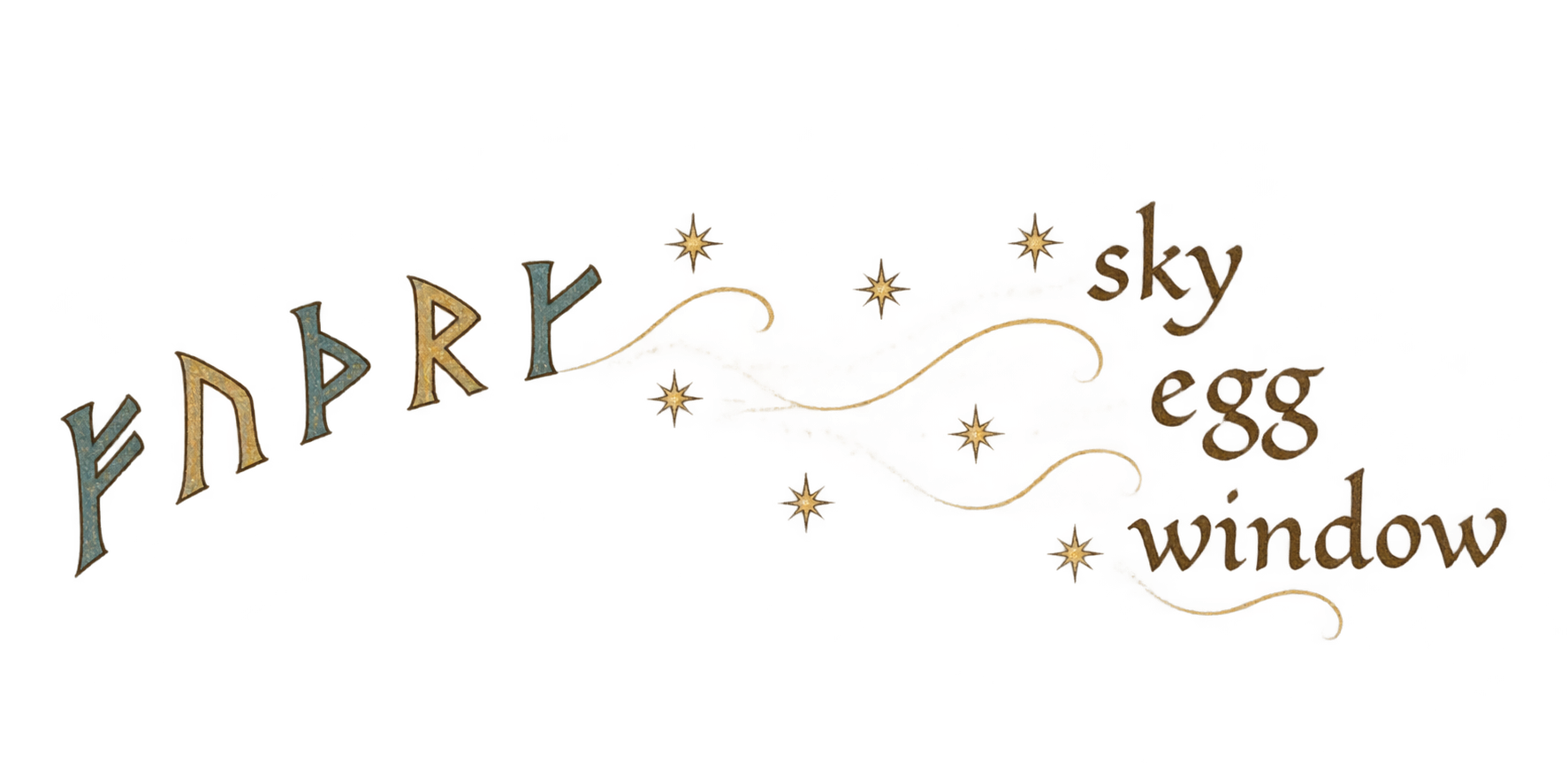
Medieval-style runes transforming through golden sparkles into the English words sky, egg, and window.
144 words & expressions
Browse all 144 words

People & everyday conversation

  • both
  • fellow
  • husband
  • kid
  • sister
  • their
  • them
  • they
  • till
  • until

Food, clothing & home

  • bag
  • band
  • booth
  • cake
  • club
  • dregs
  • egg
  • froth
  • gear
  • gift
  • knife
  • loft
  • rag
  • rug
  • scales
  • seat
  • skirt
  • steak
  • tether
  • wand
  • whisk
  • window

Body, animals & outdoors

  • bait
  • bark
  • bull
  • calf
  • dirt
  • down
  • freckle
  • gap
  • geyser
  • gill
  • girth
  • gust
  • keel
  • leg
  • mire
  • muck
  • reindeer
  • root
  • scab
  • skin
  • sky
  • wing

Things we do

  • bask
  • call
  • cast
  • clip
  • crave
  • crawl
  • daze
  • dazzle
  • die
  • droop
  • egg on
  • flit
  • gape
  • gasp
  • get
  • give
  • glitter
  • happen
  • hit
  • kindle

How we describe things

  • awkward
  • berserk
  • crooked
  • flat
  • happy
  • ill
  • loose
  • low
  • meek
  • odd
  • rotten
  • rugged
  • same
  • scant
  • sly
  • tight
  • ugly
  • weak
  • wrong

Feelings, rules & dealings

  • anger
  • awe
  • boon
  • bylaw
  • law
  • loan
  • mishap
  • outlaw
  • skill
  • sleight
  • thrall
  • thrift
  • trust

More familiar survivors

  • aloft
  • axle
  • bound
  • bulk
  • crook
  • gait
  • link
  • perhaps
  • race
  • raft
  • rift
  • saga
  • score
  • scrap
  • sleuth
  • snare
  • stack
  • tidings
  • troll

More everyday actions

  • lift
  • mistake
  • raise
  • rake
  • ransack
  • rid
  • scare
  • scowl
  • scrape
  • seem
  • skid
  • snub
  • sway
  • take
  • tatter
  • thrive
  • thrust
  • thwart
  • want
Explore the Norse influence on English at the University of York

Asgard Under the Microscope

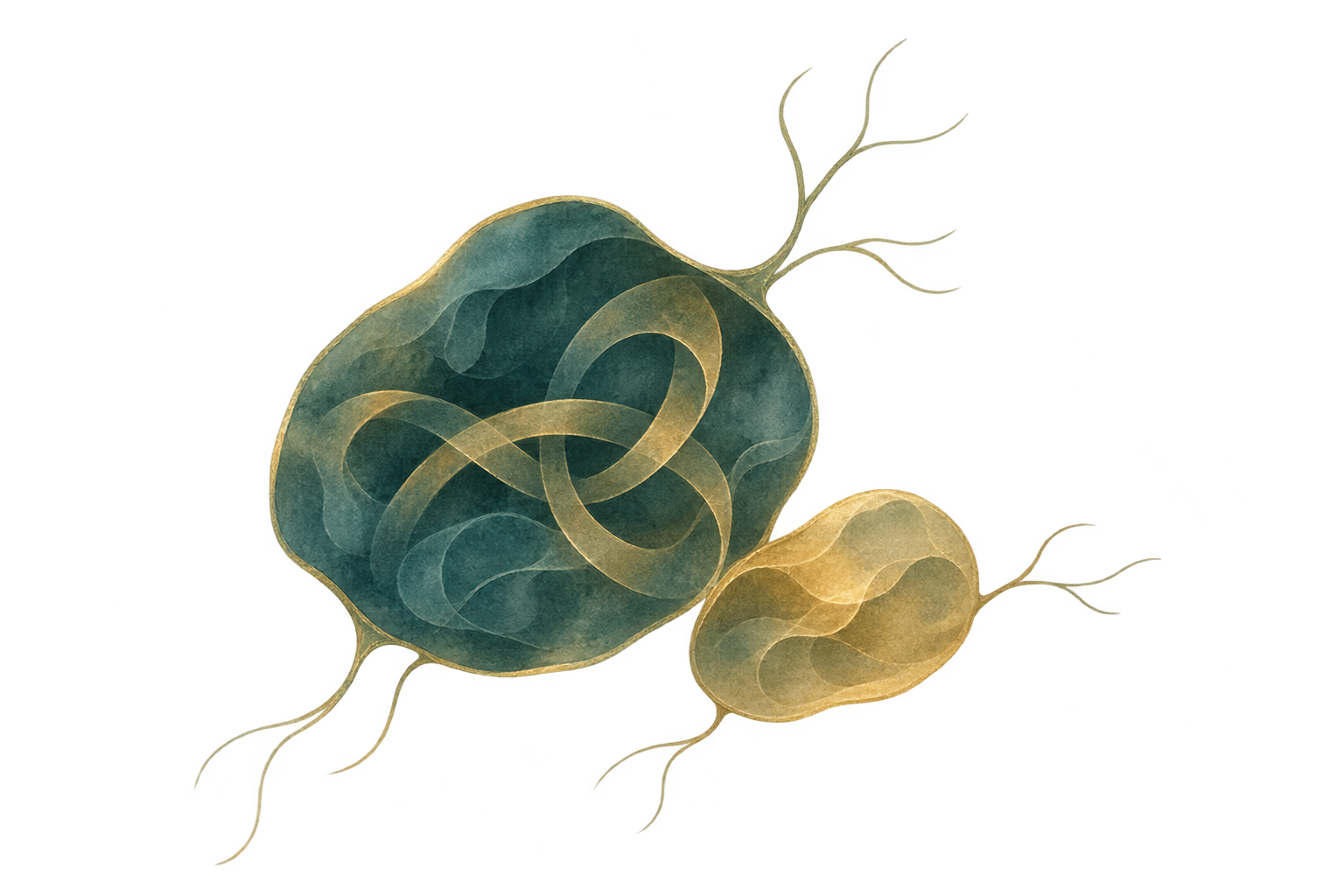
Norse gods have namesakes in the microscopic world. Asgard archaea are single-celled microbes whose family tree reads like a cast of characters from Norse mythology.

The naming story began with Lokiarchaeota, first described in 2015 using DNA recovered from deep-sea sediments near Loki’s Castle, a hydrothermal vent field in the Arctic Ocean. Named after the elusive trickster god, the site inspired the microbes’ name.

In 2017, researchers introduced Asgard—the mythical home of the gods—as the umbrella name for this growing microbial family. Other discoveries continued the Norse theme: Thorarchaeota (Thor), Odinarchaeota (Odin), Heimdallarchaeota (Heimdall), and Hodarchaeales (Höðr).

The connection goes deeper than their names: these microbes may help explain how complex life—including plants, animals, and humans—began. Researchers think an ancient relative partnered with a bacterium that eventually became the mitochondrion, the energy-producing structure inside our cells.

Explore the research at ETH Zurich
Abstract teal and gold microbes with delicate filaments and a subtle interlaced Norse knot motif.

The Daily Gods

Ancient names are hiding in your weekly schedule, connecting modern English with the world of Norse mythology.

  1. Monday

    Moon’s day.

    Compare the Old Norse máni, meaning “moon,” also the name of the god who personifies it.

  2. Tuesday

    Týr’s connection.

    Named for Tiw, the Anglo-Saxon counterpart of Týr—the brave Norse god associated with war and justice.

  3. Wednesday

    Odin’s connection.

    Woden’s day preserves the Anglo-Saxon name for Odin, the one-eyed god of wisdom, war, and magic.

  4. Thursday

    Thor’s day.

    The hammer-wielding thunder god protects humanity and battles giants with his mighty weapon, Mjölnir.

  5. Friday

    Freya and Frigg.

    Freya is the goddess of love, fertility, and magic. Although Friday’s English name traces to Frigg, scholars debate whether the two goddesses originally shared a single identity.

  6. Saturday

    Bath day!

    In Scandinavia, Saturday’s name took a different path: Danish and Norwegian lørdag and Swedish lördag come from Old Norse laugardagr, meaning “bathing day.”

  7. Sunday

    Sun’s day.

    The English “sun” resembles Old Norse sól, also the name of the goddess who personifies the sun.

Explore the weekday names at the Viking Ship Museum

Elemental Thor!

Thor has an element named after him! Thorium (Th), element 90, is a naturally occurring radioactive, silvery metal discovered in 1828 by Swedish chemist Jöns Jacob Berzelius, who examined a mineral from Norway and named the element after the thunder god.

Thorium compounds later helped gas lanterns shine brightly and were used in some high-quality camera lenses. Today, researchers are exploring its potential for nuclear energy: inside a suitable reactor, thorium can be transformed into uranium-233, a fuel that releases heat through nuclear fission.

Denmark’s Copenhagen Atomics is developing this technology with Switzerland’s Paul Scherrer Institute. Their research project has another Norse-inspired name—BALDER, after the god Baldr—with initial nuclear tests expected no earlier than 2028.

Explore thorium at the Royal Society of Chemistry
Explore the BALDER research project

Symbolic watercolor atom with a teal Th center and delicate interwoven teal and gold curves.

Vikings on Mars!

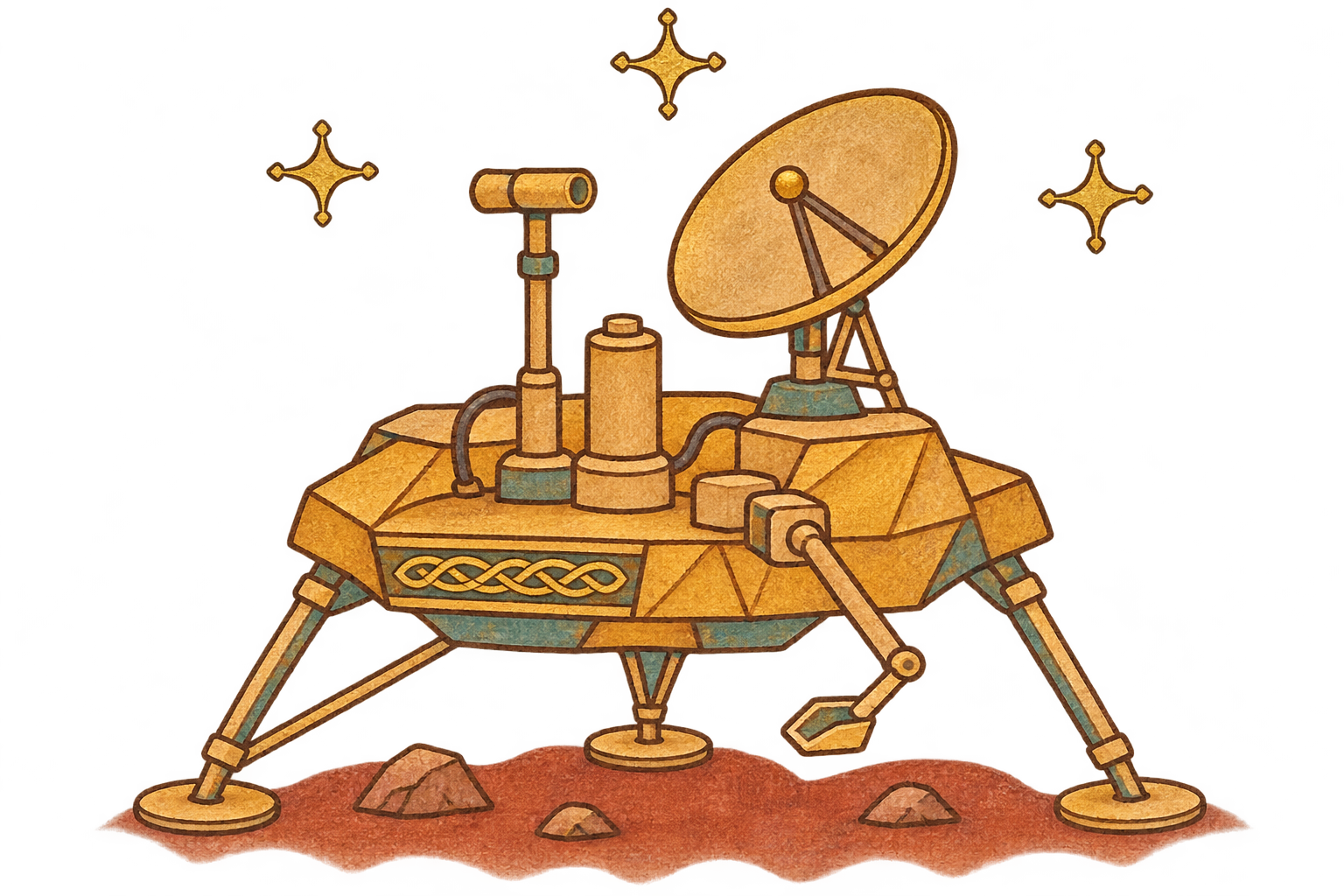
The Vikings’ spirit of exploration reached another planet—at least in name. NASA chose Viking in 1968 to evoke the adventurous seafaring tradition of Norse explorers, continuing the nautical naming theme used for its Mariner spacecraft.

Viking 1 and Viking 2 launched in 1975 and landed on Mars in 1976. Each mission paired an orbiting spacecraft with a robotic lander to photograph the Red Planet, study its environment, and search for signs of life. Their journeys carried an ancient name into an entirely new frontier.

Read NASA’s naming history (PDF, pp. 93–94)
Explore NASA’s Viking missions

Medieval manuscript-style Viking Mars lander in gold and muted teal, with Norse interlace, decorative stars, and softly fading Martian ground.

Ginger Shipmates

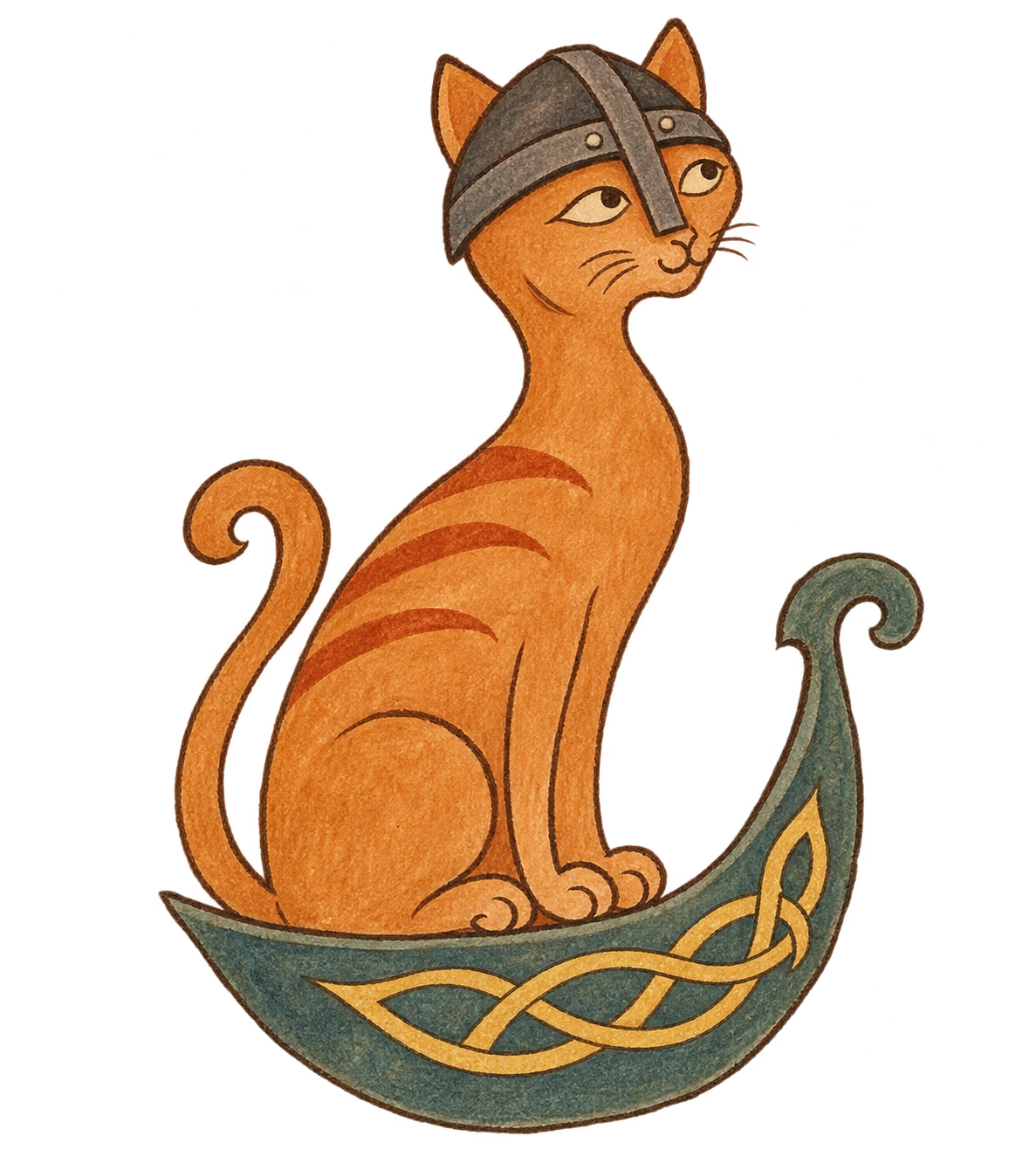
Did Vikings have a soft spot for ginger cats? Some researchers think so. Geneticist Neil Todd noticed unusually high frequencies of orange coloring in cats from several places associated with Norse settlement, including islands around Scotland, the Faroes and Iceland. He proposed that Viking travelers helped carry these colorful companions across the North Atlantic.

Ancient DNA adds another intriguing clue: cats at the Viking trading port of Ralswiek carried a maternal lineage associated with Egyptian cats, revealing how far feline travelers could roam through human trade networks.

The ginger preference remains a theory. Vikings may have helped spread orange cats, but there’s no proof they created the coloring or developed a special orange-tabby breed.

Explore Neil Todd’s Cats and Commerce
Read the ancient cat DNA research

Medieval manuscript-inspired illustration of a ginger cat wearing a hornless iron helmet, seated in a teal boat with gold Norse interlace.

Hey Siri!

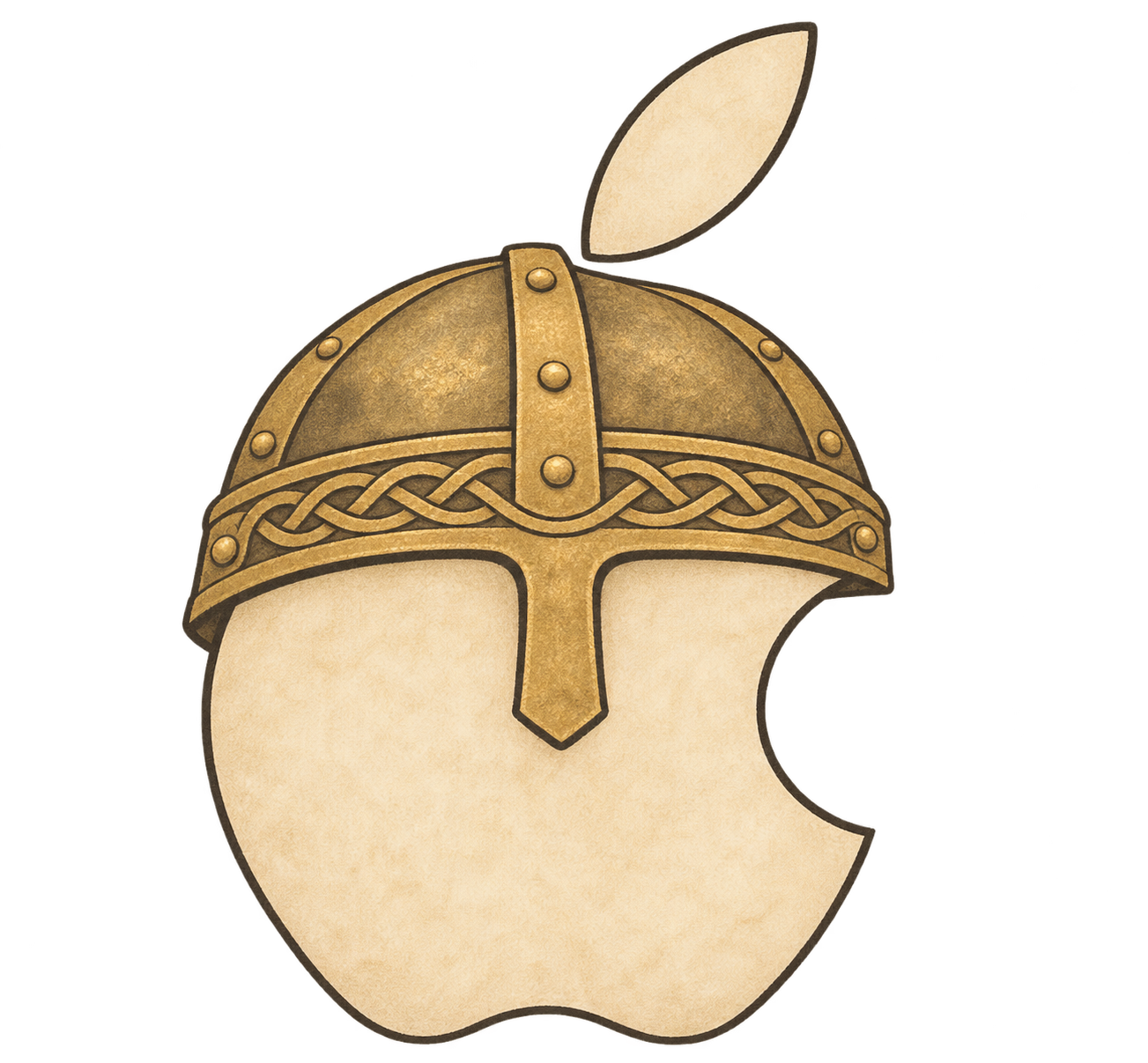
Your phone’s assistant has a name with Viking roots! Siri comes from Sigrid, descended from the Old Norse Sigríðr, combining “victory” and “beautiful.”

Siri cofounder Dag Kittlaus, who has Norwegian heritage, liked the name after working with a woman named Siri and had hoped to give it to a daughter. He described its meaning poetically as “beautiful woman who leads you to victory.” Short, memorable, and easy to pronounce, the name brought an ancient Scandinavian connection into modern technology.

Explore the story behind Siri’s name
An ivory Apple logo wearing a hornless gold Viking helmet with subtle Norse knotwork.

Viking Pairings

Every time you connect your wireless headphones, you’re borrowing a Viking king’s name! Bluetooth honors Harald “Bluetooth” Gormsson, the tenth-century Danish king who united Denmark and brought Norway under his rule.

In 1996, Intel engineer Jim Kardach suggested the name for technology intended to unite computers and mobile phones through wireless communication. It began as a temporary codename—but stuck!

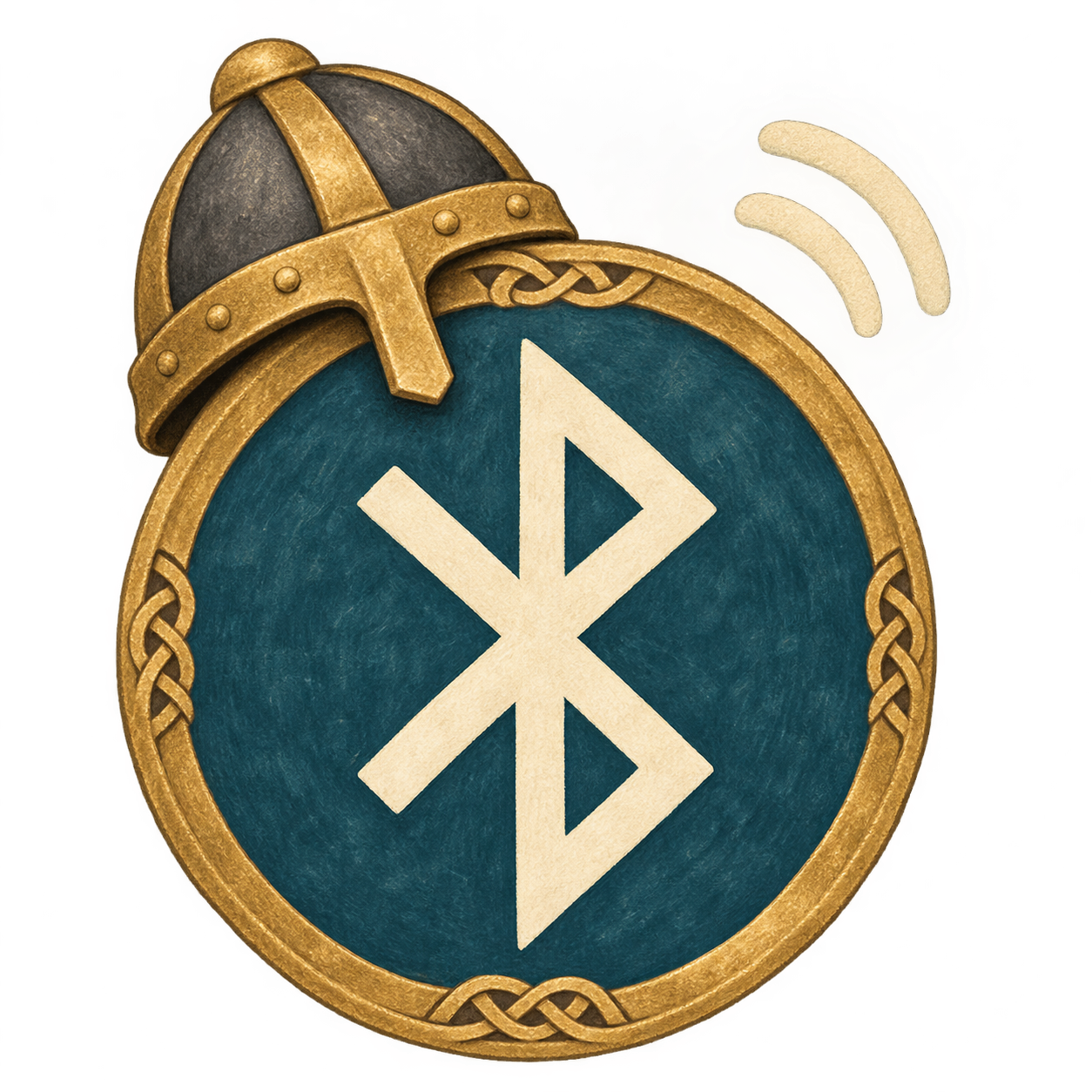
Even the familiar Bluetooth symbol has Viking roots: it combines the Younger Futhark runes for H and B, Harald Bluetooth’s initials. A Viking royal signature, right there on your phone.

Explore the Viking origins of Bluetooth
A teal Viking shield bearing the Bluetooth symbol, with gold Norse knotwork, a hornless helmet, and wireless signal marks.